
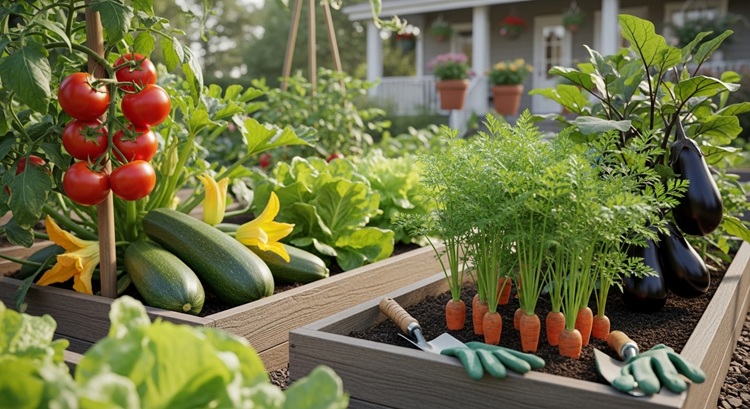
Planting your own veggies at home can be really rewarding and the start of a wonderful habit.
Not only will you enjoy the results, but you’ll also save some money, dazzle friends and family, and even take better care of your health.
This guide will walk you through everything you need to know about how to make a thriving garden at home, even if you’ve never done this before.
Let’s begin!
Table of Contents
Choose the Right Location
First things first: determining the best possible spot is your number one priority. Go for a place that gets at least six hours of sunlight a day since veggies love and need that.
Make sure it’s easy to reach for watering and picking your crops. You’ll have to be able to keep your tools and water nearby to make things even easier.
Also, if you plan on settling your garden on the balcony, you need to consider the wind. A place that’s sheltered from strong currents is best.
And, if it’s always windy outside, maybe put up a little barrier to protect your plants. This way, they’ll grow strong and healthy.
Select Easy-to-Grow Crops
We recommend sticking to plants you not only love but that are easy to grow the first time around. Why? Because that way, you’ll have a much higher chance of success and even take up gardening for life.
Even if you’re curious or you want to dabble in gardening, it’s worth setting yourself up for success, isn’t it?
Here are some options that are perfect for beginners:
Beginner-Friendly Vegetables
Lettuce is a favourite for newbies as it’s really easy to grow, and it gives you fresh leaves for salad all the time, plus, it can handle cool weather.
You might try sowing a handful of seeds in a shallow tray. You can pick the leaves one at a time, and they’ll grow back, plus it grows fast and can even chill in a sunny spot.
Radishes are also a viable option. They’re ready in just 3-4 weeks and add a yummy crunch to salads. You can slice them up for a crisp snack with a bit of cheese.
While tomatoes take a bit longer, they’re a must in loads of dishes. Cherry tomatoes do great in big pots, so they’re a fun place to start. They love a sunny spot too, so make sure they catch some rays.
Seed or Seedling?
Choosing between seeds and seedlings is all about convenience and preference.
Seeds are cheaper, which is awesome if you’re watching your wallet—a packet might “cost” you just £1-£2. Seedlings, on the other hand, save time and could cost around £3-£5, which is handy if the growing season is short.
Check out local frost dates with the Met Office to plan your planting properly. Assess what your climate is like first and how much time you’re willing to invest before deciding.
Grow What You & Your Family Love
To keep you and everyone happy, plant veggies you like to eat. For those who love salads, leafy greens are perfect. If your family is into hearty meals like stews and roasts, try carrots and potatoes.
You could even grow your own herbs–nothing tastes quite like a homemade meal spiced up with ingredients that came from your own garden!
Prepare the Soil
Start off by mixing in some compost to make it richer, which helps roots grow nice and sturdy. Make sure to check the soil’s pH too, since most veggies prefer it between 6.0 and 7.0.
You could easily do that with a toolkit readily available at most gardening shops. If needed, sprinkle in some lime to raise the pH or sulfur to lower it.
Good drainage is also important for strong, healthy growth, so dig a small hole, fill it with water, and see how quickly it drains. If it takes more than a day, think about using raised beds or containers—they drain better, and you can move them to catch more sun.
Before you plant, loosen the soil so air can reach the roots.
How To Water Efficiently
Smart watering is really important for a happy garden and for saving water. So try to do this at cooler times of day, like early morning or late afternoon, so the water doesn’t just evaporate.
This way, your plants get all the moisture they need.
For bigger, outdoor gardens, using drip irrigation or soaker hoses is a great way to get water straight to the roots, which cuts down on waste and keeps the plants hydrated.
To see if your plants need water, just stick your finger an inch into the soil. If it feels dry, it might be time for more water.
You should also check the weather patterns and factor them in for more efficient watering throughout the growing season.
The Role of Mulching
Think of it as giving your garden a nice blanket. Putting things on top of the soil, like straw or wood chips, helps keep moisture in and cool things off during summer. Plus, it prevents weeds from taking the good stuff and improves soil quality as it breaks down.
So, your garden uses resources more efficiently and stays healthier, which means your plants grow stronger without needing as much water or weeding.
Pest Control Methods
Protecting your veggie garden from pests is key to ensuring your plants grow well and give you loads of goodies. Using natural ways to keep pests away is great for the environment and helps your garden stay healthy.
Here’s how you can stop those pesky bugs and have a lively, fruitful garden:
Use Companion Planting
Give companion planting a go to fight off pests and not resort to chemicals. Plant marigolds or basil, and they’ll naturally scare off the bad bugs and attract good ones like ladybugs and bees.
This not only keeps pests away but also makes your garden a buzzing, happy place.
Regular Inspections and Quick Action
Keeping an eye on your plants is important to prevent pest damage. Check them often for signs such as chewed leaves or unusual colours.
If you spot something off, act quickly to avoid bigger problems.
Picking off damaged leaves or using natural fixes right away can save your crops.
Harvesting Tips
Knowing when’s the right time to pick your veggies can totally change how they taste and how much you get.
Grab them when they’re freshest for the best flavour and more growth, which means more veggies later on. Keep picking often—like with lettuce, go for it when it’s soft and 3 to 6 inches tall. This gives you the best texture and keeps the plant growing more leaves for longer.
Each veggie has its perfect timing. Carrots and radishes? Pull them up when they’re about an inch wide. Give them a little tug, and out they come. Tomatoes are ready when they’re fully coloured and a bit soft. Keep picking them, and the plant will keep giving you more.
Once you’ve picked your veggies, store them right to keep them fresh. Leafy greens last longer in the fridge’s crisper, wrapped in a damp paper towel. Carrots and radishes should have their tops cut and be kept cool and dark. Leave tomatoes out at room temp to keep their flavour.
Follow these tips, and you’ll enjoy your homegrown veggies, making all your gardening efforts really worth it!
Conclusion
So, this is how to grow vegetables at home. Remember, it’s very important to set yourself up for success, so start small, as small as feels comfortable, and build from there.
Who knows, in a couple of years, you might become a rather proficient gardener, looking back on these first steps fondly.
Enjoy the process, above all, and you’ll grow some great veggies. The taste alone will be more satisfying than anything because of the work you’ve put in, so don’t give up–trust the process, and you’ll never regret it!
Good luck and happy gardening!